The BiteBlock Vest

Product Design/ UX Design
Project Overview
The BiteBlock Vest addresses the critical gap in Amazon’s safety protocols where digital warnings fail to protect drivers during active dog encounters.
My Contributions
As the sole designer for this senior project, I spearheaded the entire end-to-end product development process.
“Amazon’s Current safety protocols for delivery drivers prioritize prevention over protection.”

When a warning fails—or a threat is unmapped—the driver is left without any tools to manage the encounter.

Why is this problem important?
Amazon drivers do not have protection tools in case of a dog attack.
For a delivery driver, a dog encounter isn't a "what if"—it’s a "when." Despite prevention efforts, dog bites remain a persistent threat, with over 6,000 cases reported by the USPS last year. We must design for the moment prevention fails. Safety shouldn't stop at a warning; it must extend into the encounter itself.
Initial discovery
What problem am I trying to solve?
Apr 2015 — Mar 2016
How might we provide delivery drivers with active protection tools to manage aggressive dog encounters when existing preventive measures fail?
The problem statement:
The BiteBlock vest gives drivers control when prevention fails. It uses an integrated deterrent to stop aggressive dogs from attacking  while instantly alerting dispatch and launching a 'Quick Action' emergency menu on the driver's phone.
The solution:

The Competitors

Current solutions are either purely digital or purely physical (no communication with the system). BiteBlock is the only solution that connects physical protection with the digital delivery ecosystem.
Initial research |
competitive audit

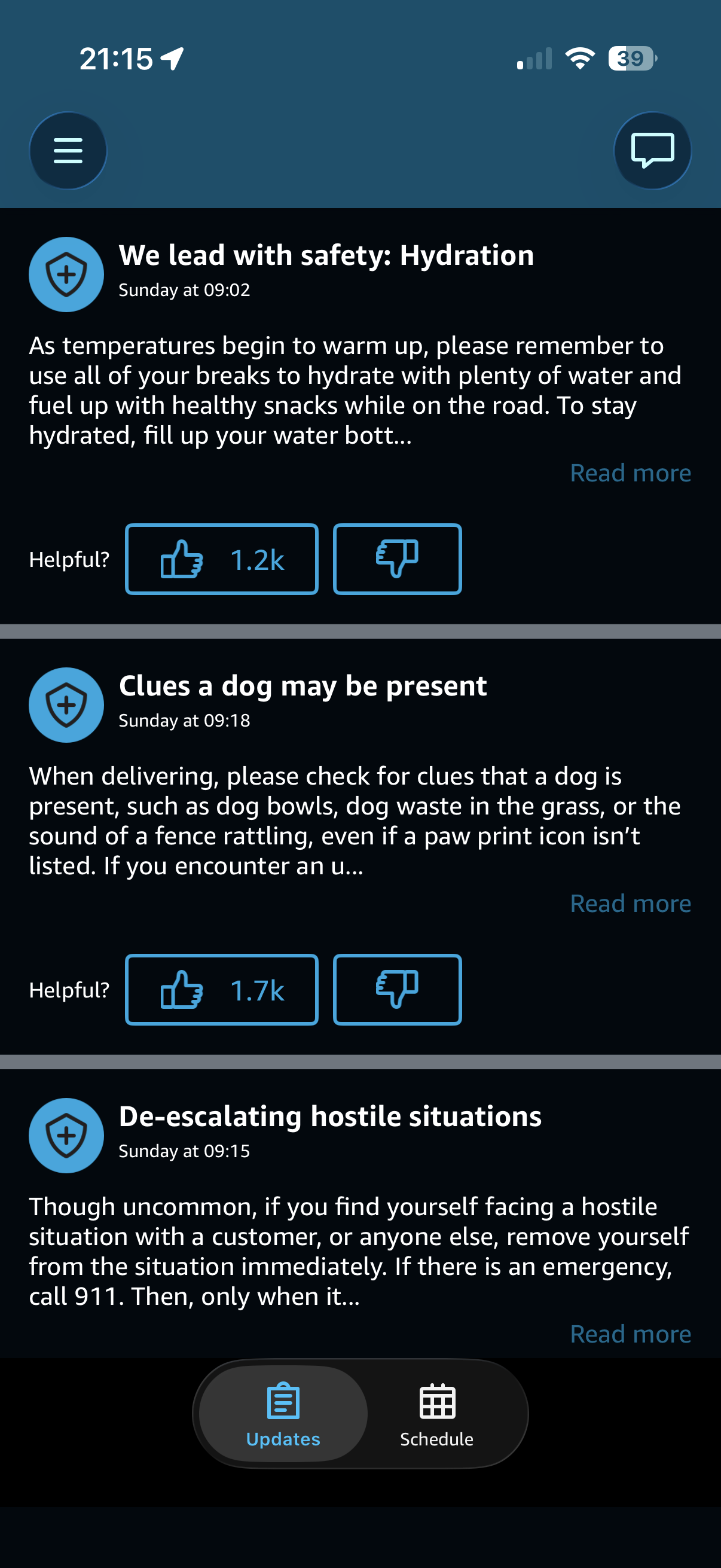
The Status Quo (Amazon Flex/DSP App): Uses passive data and "Paw Print" icons. It’s digital-only and fails when the data is wrong.

The "Old School" (Pepper Spray/HALT!): Used by USPS. It’s physical and proactive, but it requires aiming, can blow back in your face, and is "messy" for the brand.

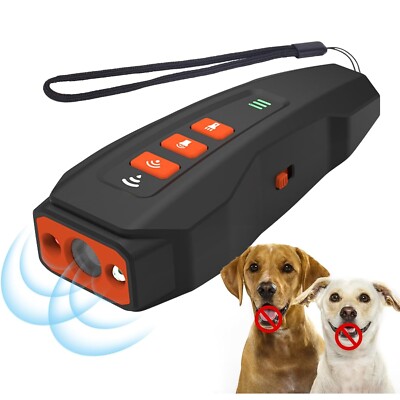
Handheld Ultrasonic Devices: Effective at stopping dogs, but they are "another thing to carry." Drivers already have their hands full with packages and phones.
Current solutions are either purely digital or purely physical (no communication with the system). BiteBlock is the only solution that connects physical protection with the digital delivery ecosystem.

Research Explanation

I used a mix of research methods to uncover the daily challenges and physical safety gaps that delivery drivers face in the field.
 I used my role as a delivery driver to gain a unique vantage point on the job’s limitations. This firsthand experience was critical in identifying the 'unprotected gap' that exists between the delivery app and a real-world threat.

PawPrint: is effective in identifying homes with dogs. However, it Does not give live updates. Protection is not emphasized: Drivers are not provided with a protective device or gear. Scanning for threats: Amazon provide drivers with a safety training  to teach driver how to deal with dog threats. However, it becomes a problem when delivering at night.
Driver’s texts to put dogs away may get ignored
Method 1:
Primary Field Research
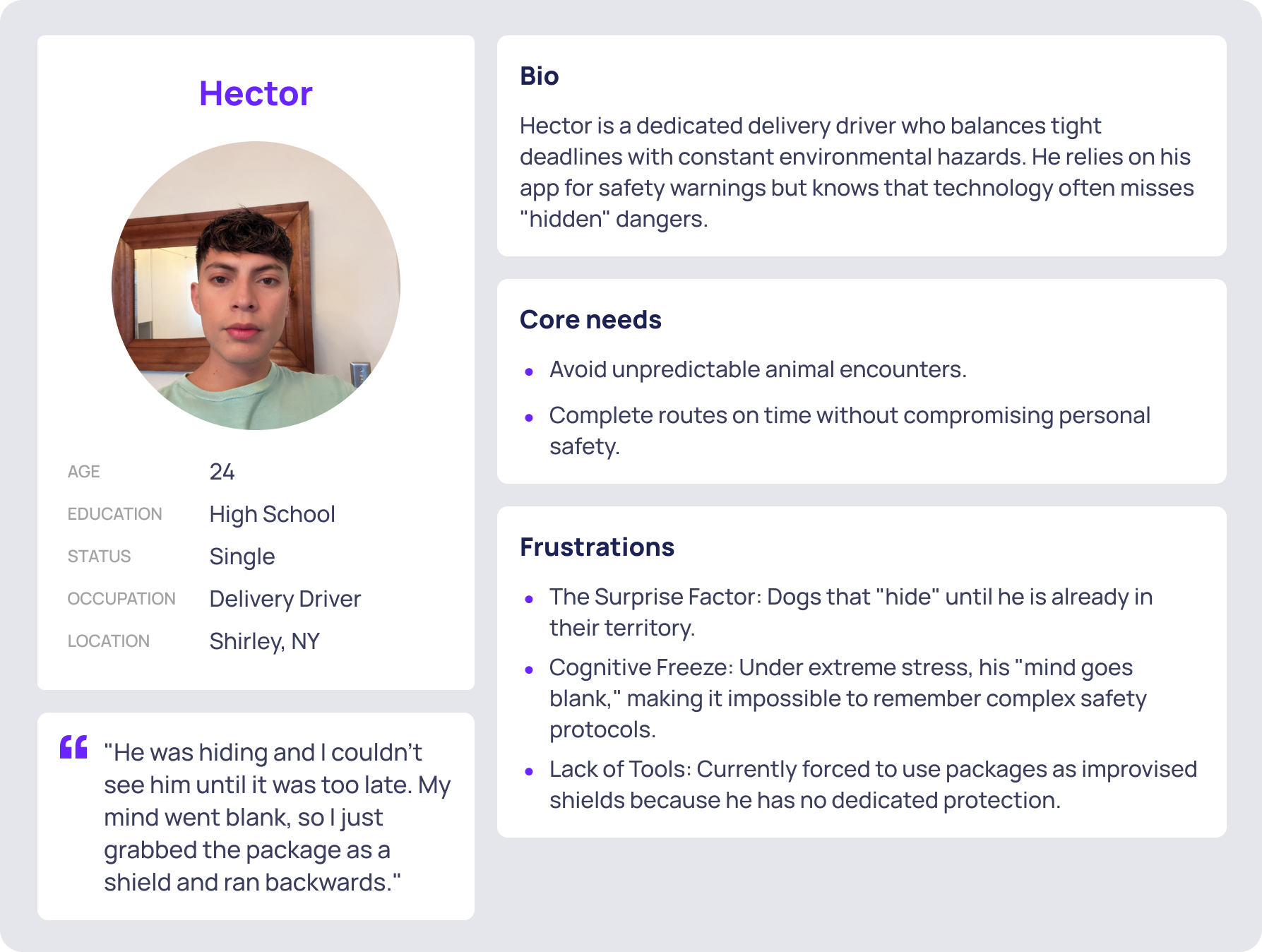
I interviewed five fellow drivers who had experienced close calls with aggressive dogs. By focusing on those who have faced these threats, I was able to map out how drivers currently attempt to defend themselves without any formal tools or training provided by the system.“My mind went blank”“He (the dog) was hiding and I couln’t see him until it was too late”“I grabbed the package as shield and ran backwards”
Method 2: Interviews
I investigated  how drivers feel with the current amazon safety measures. I discovered that they have found the paw print .
Method 3: Survey
I conducted supplemental research into the brain's response to fear. I found that during a dog attack, drivers experience 'cognitive fog,' making it nearly impossible to use a smartphone. This confirmed that a safety solution must be physical, immediate, and low-friction to be effective.
Method 4: Supplemental research
I translated my research into user personas and user journey maps to have a clear understanding of the user’s needs and pain points.
Personas
and User’s Journey

The ideation Process

I made a device that drivers can use to protect themselves in a second notice when they face a dog threat? 
What if…